
For many coffee lovers, espresso is the purest form of coffee—a bold, concentrated shot of intense flavor that packs a punch. While some may find it too strong (and I’ll admit, it’s not my favorite because of its strength!), there’s no denying that espresso is the backbone of many popular coffee drinks, from lattes to cappuccinos.
Espresso offers a powerful, rich experience, one that seasoned coffee drinkers crave for its deep flavor and immediate caffeine hit. It’s not for everyone, but for those who love strong coffee, espresso is the ultimate.
Table of Contents
Discovery
The espresso as we know it was born in Italy in the early 20th century, when Angelo Moriondo invented the first steam-driven coffee machine. This invention allowed for quick, pressurized brewing, which is essential for creating the intense flavors we associate with espresso today. The term “espresso” means “pressed out” or “expressed” in Italian, referring to the way the coffee is brewed by forcing hot water through finely-ground coffee beans.
Espresso culture became a hallmark of Italian life, with people gathering at cafés to enjoy this concentrated shot of coffee, whether as a morning wake-up call or a midday pick-me-up.
Espresso Recipe
Ingredients:
- 1 shot (about 1 ounce) of finely ground coffee beans
Instructions:
- Start by finely grinding your coffee beans. The grind should be very fine, almost powdery, to ensure a proper extraction.
- Pack the ground coffee tightly into your espresso machine’s portafilter.
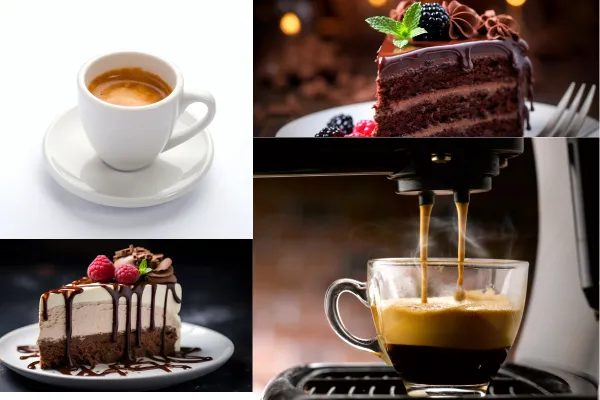
- Brew the espresso by forcing hot water through the coffee grounds at high pressure. A typical shot should take about 25-30 seconds to extract.
- Serve in a small espresso cup and enjoy immediately.
How to Brew it Perfect
While it might seem simple—just coffee and water—the process is quite precise. Every step, from the grind size to the pressure of the water, plays a crucial role in the flavor and texture of the final shot.
- Grind Size: It requires a very fine grind, almost like powder. This allows the water to extract the flavors quickly and efficiently.
- Tamping: Once the coffee is in the portafilter, it needs to be packed or tamped down firmly. This ensures the water flows evenly through the coffee, preventing over or under-extraction.
- Pressure and Timing: A proper shot requires high pressure—around 9 bars. The shot should take between 25-30 seconds to pull. Too fast, and the coffee will be under-extracted (weak and sour); too slow, and it will be over-extracted (bitter and burnt).
The perfect espresso has a rich, syrupy consistency with a layer of crema on top—the golden foam that forms when air mixes with the coffee oils. It should be bold, but not overly bitter.
What Makes it Bad
It is a delicate balance of timing, pressure, and precision, and even slight errors can lead to a less-than-satisfactory shot.
- Over-extraction: If it is brewed too slowly or the grind is too fine, the result will be over-extracted, leading to a bitter, burnt taste.
- Under-extraction: If the grind is too coarse or the brewing time is too short, it will taste weak, sour, or watery.
- Old Coffee Beans: It is best when made with freshly ground beans. Stale beans will result in a flat, lifeless shot with no depth of flavor.
A great espresso should have a balance of bold, slightly sweet, and rich flavors without overwhelming bitterness or sourness.
Why it is the Foundation of Coffee Drinks
Even if it itself is too strong for your taste (as it is for me!), it’s worth appreciating that it serves as the base for many popular coffee drinks. Without it, we wouldn’t have lattes, cappuccinos, macchiatos, or even mochas. The strong, concentrated nature of it allows to shine through even when combined with milk, syrups, or other ingredients.
It is truly the heart of coffee culture. Its intensity is what makes it the ideal starting point for a variety of coffee drinks, giving them their rich and complex base.
Caffeine Content
A single shot of espresso contains around 63 milligrams of caffeine. While it might not sound like much, the concentrated nature of the drink makes that caffeine hit feel much stronger than it would in a larger cup of coffee. Some espresso lovers go for a double shot, or doppio, for an even bolder experience.
Sugar
While purists may scoff at the idea of adding sugar to it, it’s common in many countries (especially in Italy!) to add a small amount of sugar to balance out the bitterness. If the it is too strong for you, a pinch of sugar can help smooth out the flavor.
Calories and Macros
| Nutrient | Amount per 1 oz (30 ml) Espresso |
| Calories | 2-5 |
| Protein | 0 grams |
| Carbohydrates | 0 grams |
| Fat | 0 grams |
| Caffeine | 63 milligrams |
It is virtually calorie-free, making it one of the healthiest coffee options. However, if you add sugar or milk, the calorie count will increase.
Interesting Facts
- Crema: The crema on top of a shot is considered a sign of quality. It’s the golden-brown foam that forms during extraction and is prized for its smooth texture and rich taste.
- Espresso Machines: The first steam-powered espresso machine was invented in 1901 by Luigi Bezzera, revolutionizing how coffee was brewed.
- Cultural Ritual: In Italy, espresso is often consumed quickly while standing at a café counter. It’s seen as more of a quick, invigorating moment than a sit-down drink to linger over.
- Espresso vs. Drip Coffee: While drip coffee may contain more caffeine due to larger serving sizes, espresso’s concentrated nature makes its caffeine hit feel much stronger.
Conclusion
Espresso may not be my go-to coffee drink (it’s a bit too strong for me!), but it’s undeniable that this small, bold shot of coffee plays an important role in the world of coffee. It’s the foundation of countless other drinks, and for those who love a deep, intense flavor, espresso is unmatched.
Whether you’re sipping it straight, adding a dash of sugar, or using it as the base for your favorite coffee concoctions, espresso remains a true symbol of coffee craftsmanship. Even if it’s not your favorite, you can’t help but admire the precision and skill that goes into brewing the perfect shot.